
Negativity garners more engagement than positivity. And I dislike Christian arts and entertainment critics for their employment of it. Social media has no shortage of people warning you about The Chosen TV series and its creators, or Phil Wickham or some other artist and their music, and they platform themselves on the premise of “truth telling” and warning or steering people away from the fires of hell, from the wolves in sheep’s clothing. Sometimes, they look like homemakers on YouTube who don’t explicitly tell you how to live your life, but they know their followers follow to emulate them.
They promote themselves as spiritual and someone you should follow if you want to be more like Christ. So when they post content like: “Top 10 “Christian” Music Artists to Avoid” and “Why I Stopped Reading Fantasy,” there is pressure to conform. The comment sections quickly reveal who this kind of content appeals to: people who lack discernment and have never been taught how to analyze art, neither Christian nor secular. Secondly, this kind of content is like a “Christian” tabloid. Church Gossip. It quietly shows you a picture of Phil Wickham or Forrest Frank’s face and says, “I’ll tell you something juicy about his life that will make you lose respect for him.”
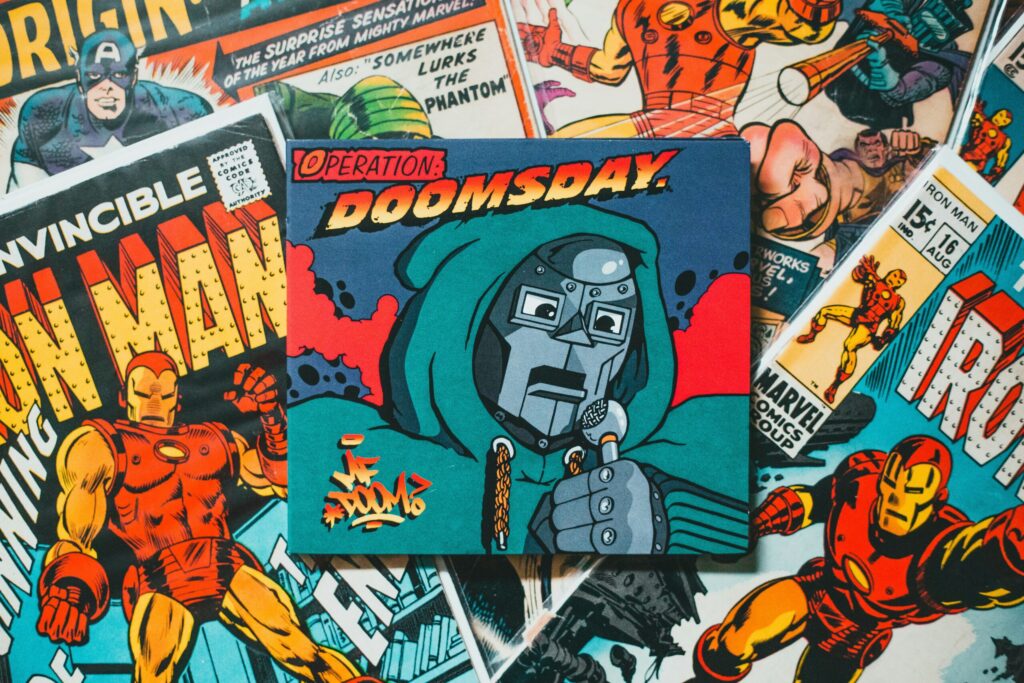
Photo by Erik Mclean on Unsplash
These social media doomsday prophets establish themselves as authorities of truth and titans of spiritual discernment, which, oddly enough is something that artists like the creators of the Chosen, or many CCM musicians do not do. Their platforms center around warning others to steer clear of deception by completely avoiding the wolf-artist and their art.
Their audience was once uninformed that a certain song’s lyrics, or a certain film was harmful, but now they have been lovingly corrected and enlightened into shying away from the “appearance of evil,” from the deceiving lyrics or lukewarm theme. The self-made Christian art-critic builds himself up as spiritually discerning by tearing down others as deceivers. The result is a cultish herd mentality, with the comment section bonded over something they can collectively dislike, boycott, and shun.
I do not see these social media doomsday prophets as true critics. True analysis and criticism of a piece of media, art, or a public figure will approach the work or person in question by weighing the virtues against the flaws to provide a balanced, unbiased, and nuanced opinion.
“They build themselves up as spiritually discerning by tearing down others as deceivers.”
Great art has always challenged the comfortable and comforted the challenged. This is why Michelangelo’s David statue is contested in the modern day by a Florida school board. Why Willis Wheatley’s artwork of Jesus laughing ruffled pious feathers. Why any new angle on a Biblical character, any thing that defies the conception of God and Heaven that our childhood illustrated Bible books ingrained in our psyche makes us cry “Wolf!” Why we spend more time bickering over how an artist portrayed a Biblical figure’s skin tone than how to have a change of heart and BE Jesus to the world of today. Maybe you won’t accept Cory Asbury’s “Reckless” version of God because you need God to be safe and predictable, because you can’t imagine recklessness as a part of Omniscience, and you can’t see “reckless” in a positive connotation but only as its negative denotative and literal modern definition.
But for all the doomsday prophet and their followers’ warnings of doctrinal unsoundness and what God can’t be (because the infinite God can’t be anything more than what we’ve already imagined Him to be), there’s a clear lack of thought put into what any Christian artist or art under fire has gotten right. No discussion around how the chorus of a song with a poorly written stanza really encapsulates a truth that will benefit the Church. So here’s how we can use and apply the parts that benefit, while staying alert to the stanza in question. Maybe a scriptwriter challenged our image of Jesus’s humanity in that TV series, or the artistic liberty seemed to cross a line in a certain episode, but here’s what the episode or season got right and how we can apply it, or how we can do better when presenting Jesus to the world in future works of art.
Criticism of the artist is much more dangerous water. We know we’re supposed to call out sin, but maybe we’ve forgotten that sin is not an action. It’s an identity issue. And self-righteousness, confusing the resisting of temptation as a form of good works, might be where the Christian Art Critic stumbles hardest. This is the beam in the eye of the doomsday prophet who is searching for the mote in the eye of every Christian artist. He so easily forgets to apply the truth of that Sunday School song, “God’s still working on me, to make me what I ought to be,” to his co-laborers in the Gospel. Or that God uses imperfect people to do great and mighty things for His Kingdom, and that His Strength is made perfect through our weakness. The self-made doomsday prophet lacks both discernment and Grace. He is a Pharisee and his appeal is to the spiritually weak and afraid, the pious and saved by their own works.
“…self-righteousness, confusing the resisting of temptation as a form of good works, might be where the Christian Art Critic stumbles hardest. This is the beam in the eye of the doomsday prophet who is searching for the mote in the eye of every Christian artist.”
If an authority on Christian art has any discernment, he will choose to platform the voices that he believes are without fault. Instead of tearing down Phil Wickham and Chris Tomlin, he will feature the Indie Musicians who are the Isaac Watts of today. Instead of criticizing Francine Rivers, he will point us to books and writers that he wishes all Christians would read. In a world where independent creatives have more opportunities than ever before, Christian art critics and consumers can challenge every mainstream deception by promoting the kind of media of which they desire to see more.
These are they who, if they read fiction at all, claim that the depiction of magical abilities in fiction offends their moral conscience. They will count how many times a fictional character was naked and mention this in their review. The more I see their judgements and opinions voiced in forums of CBA books and films, the more I have to wonder if any Christian artist’s work meets their standards for piety. And I often wonder why they bother to consume anything outside of Scripture at all.
Since Scripture is the ultimate truth, why waste hours looking for truths hidden within fiction?
We should not assume the Savior’s own parabolic sermons were so perfectly overt as much of the CBA audience expects of their fiction—whether they were fiction or recounts of real people Jesus had encountered in his earthly journey. We can be assured that the Lord God Himself is the best storyteller there is. Yet after each parable, his own disciples came to him asking for the meaning. The point of oral storytelling throughout history was for the listener to contemplate and decipher the morals, theme, and deeper meaning of the story. Christ spoke in the common tongue to common people. He told rustic stories that hid truth from the eyes of the wise and prudent and revealed their meanings to babes and those who were willing to learn.
When it comes to fiction, music, and film, it seems not much has changed with our audience’s ability to understand. And the Christian artist should not be too surprised. There were pious people who must have walked away in offense over the details of Jesus’s stories, calling them “doctrinally unsound,” “unsafe,” and warning others not to hear Him. So today, there are pious consumers who will take offense to a piece of Christian media and warn others to steer clear. They may even use the Scripture, the “Law of Moses” to make their opinion sound like discernment.
This isn’t to say that wolves aren’t hiding among the sheep, that the CCM as a publishing industry doesn’t have its issues, that every new song is worthy of being added to the Church Hymnal, or that the art of even the best intentioned among us is flawless and above reproach. But every doomsday prophet knows, if he’s critical about everything and everyone, he can guarantee he’ll discern correctly twice a day.
Photo by Denny Müller on Unsplash

Laurisa Brandt
Independent Press and NYC Big Book Award Winning Author Laurisa Brandt writes immersive, character-focused speculative fiction balanced with rich world building and romantic subplot. While her novels embrace darker themes she aspires to offer readers hope and a bit of humor. Read More >>